
Dietary Guidelines for Americans: Fruits & Vegetables
This is the second article in a deep dive into the 2025–2030 Dietary Guidelines for Americans. Last week we looked at what the guidelines say about protein. For the first time, the USDA has taken major steps towards improving the health of Americans. It’s about time. We’re in bad shape because of the way we’ve been eating.
- 50% of Americans have pre-diabetes or diabetes.
- 75% of adults report having at least one chronic condition.
- 90% of U.S. healthcare spending goes to treating chronic disease—much of which is linked to diet and lifestyle.
 The message clearly tells us America is sick.
The solution: Eat Real Food.
It doesn’t get more real than fruits and vegetables.
What the Guidelines Say
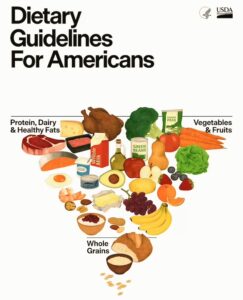
The new guidelines position fruits and vegetables at the top of the pyramid (which is now inverted) right beside protein, dairy, and healthy fats. No surprise there.
The core message is to eat a variety of colorful, nutrient-dense produce in whole form. Frozen, canned, and dried options can absolutely count, as long as they aren’t loaded with added sugars.
They also draw a clear line around juice: fruit and vegetable juices should be limited (or diluted with water), especially for kids, because juice is associated with weight gain in children.
The general intake target is 3 servings of vegetables and 2 servings of fruit per day. “Five a Day” is still the mantra.
They are on the Right Track
I agree with the guidelines on juice, but I would take things a little further. Most people should never drink fruit juice, especially kids. Juice is liquid sugar. It’s stripped of beneficial fiber. It delivers sugar fast while producing no sense of feeling full.
I think the guidelines miss the mark by not being more enthusiastic about fruits and vegetables. The recommendation of 3 servings of vegetables and 2 servings of fruit per day is a minimum. It’s a good place to start when we look at how many fruits and vegetables many of us actually eat:
- Only 10% of adults in America eat 3 servings of vegetables a day.
- Only 10% of adults in America eat the recommended serving of fruit a day.
- The average American eats 2 servings of vegetables and 1 serving a fruit a day.
Fruits and vegetables are longevity foods
The more fruits and vegetables we eat, the longer we live. They’re our primary delivery system for fiber, potassium, magnesium, and an entire arsenal of bioactive compounds including vitamin C, beta-carotene, polyphenols, flavanols, and dozens of other phytochemicals that regulate oxidative stress and inflammation, two processes sitting right at the center of aging and chronic disease.
A study published in 2021 found that 5 servings of fruits and vegetables a day reduced risk of death from all causes by as much as 13%. But, like I said, that’s just a start.
 Research is now telling us to increase fruit and vegetable intake as much as realistically possible, and some studies suggest the biggest benefits occur around 10 servings a day. A study published in the New England Journal of Medicine found that 10 servings of fruits and vegetables a day can decrease all-cause mortality by as much as 31%. It’s worth it to be intentional about more fruits and vegetables.
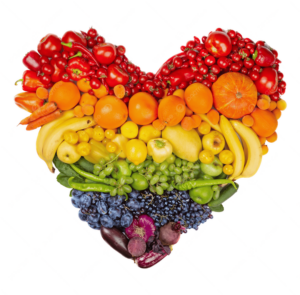
Eat the spectrum: dark leafy greens, cruciferous vegetables, tomatoes, carrots and orange produce, mushrooms, and berries and other deeply colored fruits. Different colors represent different polyphenols and micronutrient profiles.
And no, fruit doesn’t make you fat. Whole fruit comes packaged with fiber and polyphenols that blunt the glycemic response.
A study published in the Journal of Nutrition in 2021 found that eating one cup of leafy green vegetables a day boosts muscle function. Popeye was right.
Buy Organic and Wash
A study published this month by the University of Southern California found that a diet high in fruits, vegetables and whole grains might be linked to a higher risk of lung cancer. Why? Pesticides.
Focus on buying organic. Wash with water and maybe even a little baking soda.
Eat as many fruits and vegetables as you can possibly eat in a day. Use plenty of butter, olive oil and spices to add flavor. And look for great recipes to make them more fun.
Stay Strong,
Bo Railey
