
Dietary Guidelines for Americans: Protein
The 2025–2030 Dietary Guidelines for Americans were released on January 7, 2026, by the US Department of Agriculture and the US Department of Health and Human Services. For the first time, the USDA has taken a major step towards improving the health of Americans, which has been declining rapidly over the past four decades:
- 72% of U.S. adults are overweight.
- 41% are obese
- 14% have diabetes
- 43% have prediabetes, which presents its own set of issues
- 20% of adolescents are obese
- U.S. life expectancy is 3.6 years below that of other high-income countries
- Our health-adjusted life expectancy is 4.8 years below average
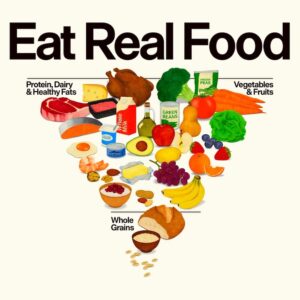 For the first time ever, the USDA is speaking in a way that makes sense. Their simple solution to fixing the crisis in America: Eat Real Food.
That’s the new proposition of the Dietary Guidelines for Americans.
Real Food Wins. “America is the greatest country on Earth. And the sickest. Highly processed food has hollowed out health, driving obesity, diabetes, heart disease, cancer and early death.” The truth is simple: real food restores health.
Yes, Yes, Yes! It’s about time.
I’ve spent most of my 30 years in the health and fitness business arguing with well-meaning dieticians about what healthy eating looks like. For decades they followed the USDA guidelines which prioritized highly processed foods, creating unprecedented rates of chronic disease.
The government is finally on board with what many of us have been saying for a long time—Eat Real Food. Sounds easy enough, but not so much in our industrialized world.
Finding real food takes intentionality. It takes work. It takes saying no and being weird. But that’s okay if it means I have no health issues and I can completely keep up with my four kids who are ages 8–14.
Over the next few weeks, I want to do a deep dive into some of the new USDA recommendations. I’m thrilled that our government finally realizes we can change our health crisis if we start eating real foods.
Let’s start with a deep dive into protein.
Protein
Guideline Recommendations
The new Dietary Guidelines recommends consuming almost twice as much protein as they previously recommended: 1.2–1.6 grams per kilogram of bodyweight per day (up from 0.8 g/kg/day). They also emphasize how you should hit that target by prioritizing high-quality, whole-food protein sources at every meal, from both animal and plant options.
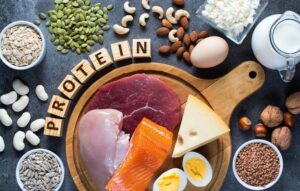
That includes eggs, poultry, seafood, dairy, and even red meat in moderation, as well as beans, lentils, nuts, seeds, and soy. They also make an important distinction about food quality, urging people to avoid deep-fried foods and choose meats with minimal added sugars, refined starches, and chemical additives.
They Got it Right
 The old guideline of 0.8 g/kg/day recommendation was never intended to be an “optimal health” target, it was intended to be the minimum amount required to prevent deficiency. Most people (especially older adults and athletes) do better with 1.2–1.6 g/kg/day for building and preserving muscle mass (when combined with resistance exercise), improving satiety, and supporting metabolic health.
Let’s Make it Easier to Understand
- Eat a reasonable serving of protein evenly across 2–3 meals a day. How do you know what’s reasonable? The meat on your plate should take up about a third of your plate.
- If you are older or an athlete, go for 3–4 meals a day that include protein. Athletes require more protein for muscle synthesis. Older folks experience something called anabolic resistance—it takes more protein per meal to trigger muscle protein synthesis.
- Prioritize protein quality. Most of your protein should come from whole foods (beef, pork, poultry, fish, and eggs), not protein powders.
- Limit processed meats. Red meat isn’t the issue. Processed meats have lots of additives like nitrates and fillers. They’ve been identified as a leading cause of colon cancer.
So, eat more protein from real food sources. That makes me happy because I love meat, and I love to cook it. I grill outside all winter long. Make sure you’re getting enough meat. The protein is essential for strong muscles and a healthy immune system.
Stay Strong,
Bo Railey
