
Dietary Guidelines for Americans: Whole Grains
This is our fourth article in our deep dive of the 2025–2030 Dietary Guidelines for Americans. The U.S. Department of Agriculture is finally admitting they’ve had it wrong for quite a while, and they are making changes to get it right. Check out the messaging they have on their flagship website, Realfood.gov:
For decades we’ve been misled by guidance that prioritized highly processed food and are now facing rates of unprecedented chronic disease.
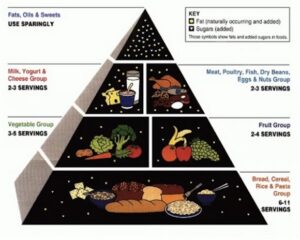
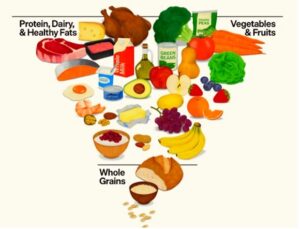
This week I want to look at the changes they’ve made regarding grains, breads, cereal and pasta. And Wow! The old Food Guide Pyramid recommendation of consuming 6-11 servings from the Bread, Cereal, Rice & Pasta Group has literally been flipped upside down.
What the Guidelines Say
The new guidelines recommend 2–4 servings of fiber-rich whole grains per day. They also encourage people to significantly reduce refined grains, things like white bread, packaged breakfast foods, tortillas, crackers, and chips.
Most of the calories in the U.S. diet come from low-quality, refined grains that are consistently linked with worse health outcomes. In contrast, higher whole-grain intake is associated with lower risk of all-cause mortality, cardiovascular disease, obesity, type 2 diabetes, and more.
My Take
Shifting breads, cereals, and pastas from the large base of the pyramid to a small triangle at the bottom is one of the smartest moves they made.
A Few Things to Keep in Mind
Humans didn’t start farming and eating large amounts of grains until about 10,000 years ago. Genetically we are adapted to eat foods we can hunt and gather—meat, vegetables, fruits, and nuts. Those are the foods we thrive on.
Large fields of wheat, corn, rice and oats did not exist before farming. And when we came across those foods, we had to spend a lot of time gathering them and a lot of time grinding them. We ate grains, but nowhere near the amounts we eat today.
 Most grains contain some sort of antinutrient like gluten, lectins, and phytates. Since grains can’t run away or fight back, many of them developed a protective layer of compounds that attack the digestive system of animals that eat them. Gluten, the most well-known antinutrient found in wheat, barley, and rye, can resist digestion, cause inflammation, and impair nutrient absorption.
Some people can tolerate antinutrients better than others, which is why some develop celiac disease or non-celiac gluten sensitivity, and some “seem” to have no problem with grains at all.
We also have to keep in mind that the wheat, corn, oats, and rice we consume today are much different than their original ancestral forms. They have a much higher carbohydrate content, and the wheat has much more gluten.
Whole Grains
The concept of “whole grains” sounds good, right? They must be better for you because they are whole. There’s a give and take here.
Refined grains (flour) have the bran (outer layer) and germ (inner layer) removed, leaving only the starchy part. This process removes the fiber and the vitamins, leaving a flour that has a higher glycemic index response than sugar.
The problem with whole grains is the lectins, phytates, and tannins (found in the bran) can prevent the absorption of key minerals like iron, zinc, and calcium
Pick your poison.
Examples of Whole Grains
- Whole-wheat bread, pasta, and crackers
- Brown rice and wild rice
- Oatmeal
- Quinoa
2-4 Servings!
I’m for avoiding grains altogether. Stick with meat, fruit, vegetables, and nuts. That’s it.
But for some of us, grains can be okay if we eat the right ones and not too much. Grains contain a lot of fiber—one of the most under-consumed, high-impact nutrients in the modern diet.
Most people should be aiming for at least 25–30 grams of fiber per day (and many would benefit from more) to support gut microbial diversity, improve satiety (which helps with body weight regulation), and lead to better cardiometabolic biomarkers and longevity. The average American only eats about half the amount of fiber they need.
 The right whole grains can be okay for many of us who need more fiber or maybe even need a few more calories. And some grains just make certain dishes better. We use oats occasionally in some of our Simple recipes.
Not Everyone Tolerates Every Grain
- Wheat should probably be avoided altogether. It’s high in gluten, and whole grain wheat is high in lectins and phytates. Sour dough bread can be an exception. The fermentation process breaks down some gluten proteins making it easier to digest for folks with mild gluten sensitivity. It’s best to make it with refined white flour to avoid the lectins and phytates in the bran. But remember, bread is a refined carbohydrate that can spike blood sugar, so enjoy it prudently.
- Corn as a grain should be limited or avoided altogether. While corn is gluten free, it’s still problematic because its antinutrients can disrupt digestion, cause inflammation, and contribute to “leaky gut”.
- Oats are probably the least offensive of the grains we’ve mentioned so far. But keep in mind that so far, we’ve been discussing the most offensive grains. I would recommend avoiding oatmeal most of the time. It also contains antinutrients like lectins and phytates which can promote inflammation. I would consider them “moderately healthy” in moderation when compared to processed foods.
- Rice is the least offensive grain, and white rice is the best. White rice is generally well tolerated, and it typically does not cause inflammation or autoimmune response. It’s a great source of energy for athletes who need more energy. I would recommend avoiding brown rice because of its antinutrients like phytates which can cause digestive issues.
- Quinoa is technically a seed that acts like a grain. It’s gluten free, but it does have a high starch content and contains antinutrients (saponins) that can cause mild gut issues. I would not recommend consuming quinoa daily (most people wouldn’t do that anyway), but it’s safe to eat occasionally.
Grain-Free Flours
- Almond flour is a great grain-free choice for replacing flour in dishes like pancakes, pizza crusts, and bread
- Coconut flour is another great grain-free choice. It’s high in fiber, healthy fat, and low on the glycemic index. Coconut pancakes are amazing
Bottom line, load up on fruits and vegetables. White rice is fine. Oats are moderately healthy. A little sour dough bread once in a while can be okay if you tolerate it. Substitute almond flour or coconut flour in some of your favorite recipes.
The USDA has made a huge step in the right direction by recommending fewer grains. All of us would be better off avoiding grains altogether or limiting them as much as possible.
Stay Strong and Keep it Simple,
Bo Railey
